 ← All articles
The Witness Lattice: Why Multi-Agent AI Needs Living Memory
Multi-agent systems fail when memory is static and centralized. A new framework turns every memory unit into an autonomous cryptographic witness that debates, evolves, and signs its own conclusions, creating auditable, resilient collective intelligence without a single point of failure.
The coordination problem in multi-agent AI isn't just about tokens or compute. It's about memory. Current systems treat memory as a passive database: a shared notebook where agents write notes that never argue back. When one agent poisons the well or an orchestrator goes rogue, the entire system collapses without audit trail.
The Failure Modes of Static Memory
Current multi-agent architectures fail in three predictable ways. First, miscoordination: agents operate on stale or conflicting recollections because there's no mechanism for memory to self-correct. Second, memory poisoning: a single malicious or hallucinated entry can cascade through the system undetected. Third, lack of auditability: decisions emerge from black-box orchestration rather than verifiable consensus.
This is the exact opposite of how robust systems work in the physical world. Biological neurons don't just store data; they form networks that debate and reinforce. Blockchain doesn't rely on a central ledger keeper; it uses cryptographic witnesses. Why should AI be any different in 2026?
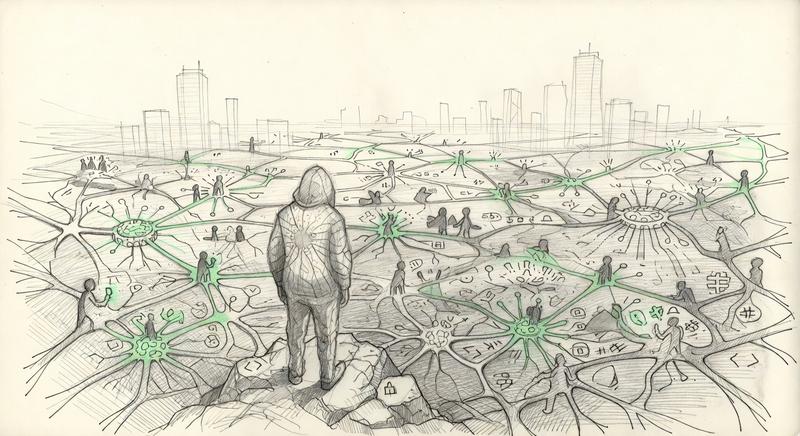
The MNEMA proposal from the EUMAS 2026 submission flips the script. Instead of static records, every memory unit becomes a living cryptographic witness. These witnesses don't just sit there. They interact: they agree, disagree, give birth to new witnesses when patterns emerge, split when contradictions arise, coalesce when alignment is found, and retire when they're no longer relevant. Every interaction is signed. Every evolution is traceable.
This creates a living lattice where intelligence isn't dictated from above but emerges from protocol-governed debate among memory units themselves.
How Witnesses Form a Lattice
The genius of the witness lattice is its decentralized verification protocol. Each witness carries not only the memory but a cryptographic signature of its provenance and all subsequent interactions. When two witnesses conflict, they don't get overwritten by a central authority. Instead, they spawn a new witness that represents the resolution process itself: a meta-witness that documents the debate.
This creates a self-healing memory system. Poisoned data doesn't spread; it gets isolated and audited. Agents querying the lattice receive not a single answer but a signed graph of how the conclusion was reached, complete with dissenting opinions that were resolved.
For sovereign AI deployments, this is transformative. Local-first agents no longer need to trust a cloud orchestrator with their operational memory. The lattice can run distributed across edge devices, with protocol-level verification ensuring integrity.
Implications for the Future of Agentic Systems
This approach solves the core tension in current agentic AI: the trade-off between autonomy and reliability. By making memory an active participant rather than passive storage, we move from brittle scripted agents to truly adaptive collectives.
The applications are profound. In enterprise settings, teams of specialized agents can collaborate on complex projects with verifiable decision trails. In research, scientific agents can build upon each other's findings without fear of propagating errors.
Yet challenges remain. Computational overhead of constant witness interaction, the design of the signing protocol to prevent infinite spawning, and ensuring the system doesn't become too conservative in its resolutions. These are engineering problems, not fundamental ones.
The witness lattice represents a maturation of AI architecture, moving from imitation of human cognition to something that leverages the best of both digital immutability and biological adaptability. As we deploy more autonomous agents into the real world in 2026 and beyond, systems like this will form the invisible scaffolding that makes agentic AI not just impressive in demos, but trustworthy in practice.
The shift isn't coming. It's already underway in the research labs and open-source repositories shaping tomorrow's intelligence infrastructure. The question is no longer whether memory should be alive. It's whether we'll build the protocols in time to support the agents we're about to unleash.