 ← All articles
The End of Cloud AI: Why Local Agents Are Inevitable
Cloud-dependent AI has served us well, but the future belongs to agents that run on your own hardware. Here's why local-first intelligence is the next logical step for sovereign users and builders.
We have normalized a strange dependency. Every day, millions of professionals fire off prompts to models hosted in distant data centers. The convenience is undeniable: powerful intelligence available on demand, no hardware upgrades required, and the model always seems to be getting smarter overnight.
But this convenience comes with invisible costs that are becoming harder to ignore. First is the privacy question. When you send sensitive business strategy, customer data, or creative work to a third-party API, you are trusting not just the provider's security practices but also their internal policies on data retention and training. Even with assurances that prompts aren't used for training, the data still leaves your control the moment it hits the wire.
Latency is another creeping problem. What feels instantaneous today can become a bottleneck as workflows grow more complex. Agentic systems that need to make dozens of sequential calls amplify every millisecond of round-trip time. For real-time applications or users in regions with less-than-perfect connectivity, this creates friction that local execution simply doesn't have.
Then there is the economic reality. Usage-based pricing seems fair until your workflows scale. What starts as a minor line item in the budget can explode when an agent begins autonomously researching, summarizing, and iterating. Predictable costs matter for both individuals and enterprises, and running inference locally turns the expensive variable cost into a one-time hardware investment.
Most critically, reliance on cloud APIs introduces systemic fragility. When a major provider experiences an outage, as we saw multiple times in early 2026, the downstream effects cascade across thousands of tools and products. Developers who built their entire stack around a single model's API suddenly find their applications broken. This isn't theoretical. We've watched productivity tools, customer support systems, and even internal knowledge bases go dark simultaneously because they all depended on the same upstream service.
The pattern is familiar from other layers of computing. We once accepted that email, storage, and compute would live in the cloud because the tradeoffs made sense. But intelligence is different. It is becoming the core interface through which we work, create, and decide. Treating it as a rented utility rather than infrastructure we control carries risks we wouldn't accept in other critical systems.
The hardware landscape has changed dramatically. Consumer GPUs and specialized AI accelerators have reached a point where running capable models locally is no longer a niche pursuit for researchers. Quantization techniques, efficient architectures, and clever distillation mean that models with impressive reasoning capabilities can run on laptops and even high-end phones with acceptable performance.
This isn't about rejecting the cloud entirely. Centralized training of frontier models will likely remain necessary for the foreseeable future due to the massive compute required. The shift is in inference and agent execution, the day-to-day use of intelligence. Training in the cloud, running locally represents the pragmatic balance.
Open-source models have been the unsung heroes of this transition. Communities around projects like Llama, Mistral, and their successors have demonstrated that collaborative development can produce systems that rival closed alternatives in many practical tasks. More importantly, they give users the freedom to modify, audit, and deploy these models exactly as they see fit. When an agent is running on your machine, you can implement whatever guardrails, logging, or customization your specific use case demands.
Consider the difference in failure modes. A cloud API outage is binary, you either have access or you don't. A local model might be slower or less capable on certain tasks, but it degrades gracefully. You can fall back to smaller models, optimize prompts, or even switch architectures without external permission. This resilience matters as AI becomes infrastructure for critical workflows.
There are still real challenges. Keeping models updated with the latest capabilities requires effort. Hardware requirements, while dropping, still represent an upfront cost. And the very best models remain too large for anything but the most powerful local setups. These aren't insurmountable problems, but they explain why the transition has been gradual rather than revolutionary.
The deeper point is about agency. When intelligence lives in the cloud, your relationship to it is that of a customer. When it lives locally, it becomes an extension of your own capabilities. The difference between renting intelligence and owning it might seem semantic until you need to rely on it for something important: something time-sensitive, confidential, or contrarian to what the model providers might prefer.
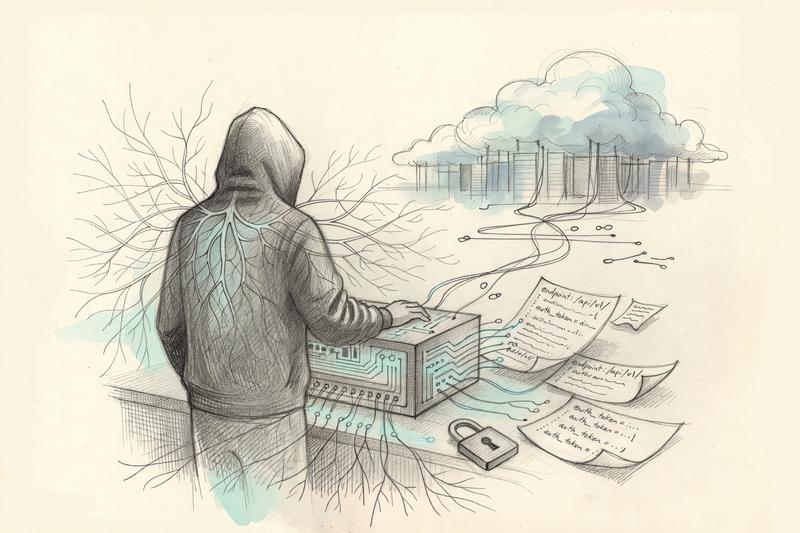
We are moving toward a world where AI agents handle more of our cognitive load. They will research, analyze, draft, and decide on our behalf. In that world, the question of where those agents execute becomes a question of sovereignty. Do we want our autonomous systems making calls to remote servers we don't control, potentially leaking context or being throttled based on terms of service changes? Or do we want them operating within our own infrastructure, bound by rules we set and with full visibility into their reasoning?
The technical arguments favor local execution for many use cases. The philosophical ones are even stronger. Intelligence is too important to outsource completely. The future isn't cloud or local. It's hybrid by design, with the sensitive, frequent, and autonomous work happening under our direct control.
This transition won't happen overnight. It requires better tooling, easier model management, and continued progress in efficient inference. But the direction is clear. The age of cloud-only AI is ending not because the cloud failed, but because we have outgrown the limitations it imposes on how we think and work.