 ← All articles
The Reasoning Illusion: Why Today's AI Agents Still Can't Plan
Benchmarks look impressive and demos go viral, but strip away the scaffolding and most "agentic" systems collapse the moment they face real uncertainty. The gap between faking reasoning and actually thinking is still massive.
The AI world is high on its own supply again. Every other week we see a new "agent" framework drop that promises to automate away entire job categories. The demos are slick. The tweets are triumphant. The VCs are opening their wallets.
But spend ten minutes actually using one in a non-toy environment and the illusion shatters.
These systems are incredible at following narrow, well-defined scripts. Give them a clear checklist and a structured API surface, and they perform. The moment you introduce ambiguity, incomplete information, or the need to recover from their own mistakes, they start doing what language models do best: they make shit up with extreme confidence.
This isn't a failure of scale. It's a failure of architecture.
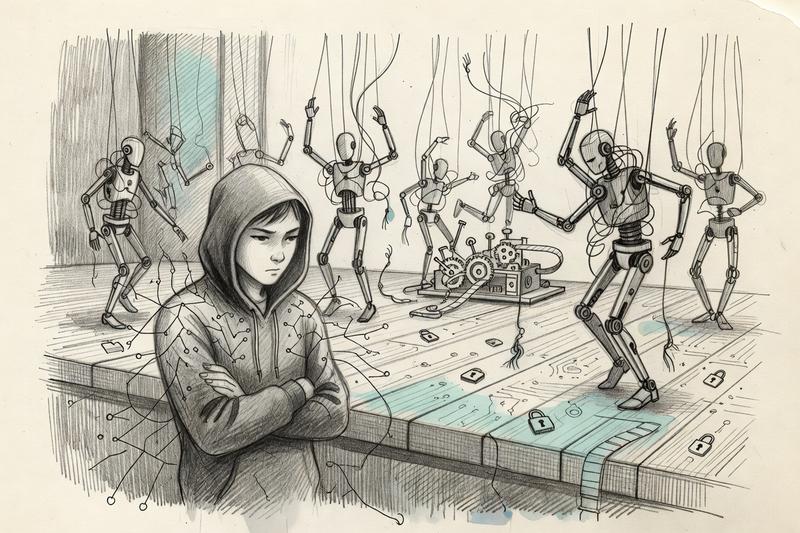
Chain-of-thought, tree-of-thought, ReAct, whatever the current acronym salad is, they're all sophisticated ways to make the model simulate planning without actually having a persistent world model or genuine goal-directed behavior. It's theater. Impressive theater, but still theater.
The fundamental limitation remains: these models are next-token predictors with a very good memory trick (the context window). They don't "think" in the way a human does when they say "I need to consider option A, but if that fails then pivot to B while monitoring constraint C."
They approximate that pattern because they've seen it millions of times in training data.
This is why the most reliable "agents" right now are the ones with heavy human-in-the-loop scaffolding or extremely narrow domains. The general intelligence demo is still very much a demo.
And that's okay. It's actually good. It means the people who understand this gap have a massive advantage.
The ones quietly building real memory systems, proper planning architectures, and local-first deployment strategies are the ones who will own the next phase.
The benchmark chasers will keep chasing. They'll post new SOTA numbers on some artificial evaluation that looks impressive until you read the paper. They'll ship products that work 70% of the time and require a support team for the other 30%.
Meanwhile, the interesting work is happening in the places that don't need to publish every week.
It's in the labs building stateful agents with real error recovery. It's in the teams treating the LLM as a component instead of a god. It's in the slow, painful work of giving models actual tools that have predictable failure modes instead of hoping the model will "figure it out."
And most importantly, it's in the realization that sovereignty matters here too. An agent that has read your company's entire internal knowledge base is incredibly powerful: right up until that knowledge lives on someone else's servers and that someone gets acquired, changes their ToS, or gets hacked.
Local models aren't just for privacy fetishists anymore. They're becoming the rational default for anyone moving serious workloads into production.
The next leap won't be announced with a flashy blog post and a new parameter count. It'll be the quiet month where suddenly a bunch of internal tools start working reliably without constant prompting and correction.
We're not there yet. But we're closer than the hype cycle wants you to believe.
The people who see through the illusion today are the ones positioning themselves to build what actually ships tomorrow.
This doesn't mean we should be cynical. The progress is real. The models are legitimately better than they were even six months ago at maintaining coherence over long contexts. The tooling around them is improving fast.
But confusing better pattern matching for genuine intelligence is exactly how we get disappointed later.
The upgrade to larger context windows, better reasoning chains, and faster inference is welcome. It's table stakes now.
The real question is whether we use these tools to build systems that augment human judgment, or whether we keep pretending the model can replace it.
I'm betting on the former. The ones who understand the difference will be the ones still standing when the next hype cycle crashes.