 ← All articles
The Dawn of Reliable Local Agents
Open-source agentic frameworks have crossed a critical reliability threshold, bringing production-grade autonomous agents within reach of anyone running them on their own hardware.
The demo always works. That's the running joke in agentic AI. You watch a slick video of an autonomous agent booking your flights, debugging your code, or researching a market, and it looks magical. Then you try it yourself and it loops endlessly, hallucinates permissions, or quietly gives up after the third tool call.
Something changed in the last few months. The gap between those polished demos and something you can actually run on your own hardware has narrowed dramatically. Open-source agent frameworks have crossed a reliability threshold that makes them worth taking seriously for real work.
This isn't another hype cycle about bigger models. It's about better scaffolding. The newest wave of agent orchestration tools has focused on three things that actually matter: robust error recovery, persistent memory that doesn't leak context every ten turns, and tool-use protocols that fail gracefully instead of derailing the entire task.
The shift feels familiar if you've watched Bitcoin infrastructure mature. Early Lightning channels were fragile experiments. Then came better routing, better watchtowers, better defaults. Suddenly it just worked for more people. Same pattern here. The underlying models aren't magically smarter in every case, but the systems around them have gotten much less stupid.
What makes this moment different is the emphasis on running locally. Not because cloud APIs are evil, but because once an agent has access to your email, calendar, codebase and bank account, you really don't want it phoning home to a corporation every few seconds. The privacy and sovereignty implications are obvious but worth repeating. Your agent, your rules, your data.
The technical details matter here. Newer frameworks have introduced structured reasoning loops that look more like o1-style chain-of-thought but executed in open code you can audit and modify. They separate planning from execution, maintain separate short-term and long-term memory stores, and include built-in verification steps before taking irreversible actions.
Benchmarks that used to be embarrassing (success rates in the low twenties percent on complex multi-step tasks) are now hitting sixty, seventy, even eighty percent in some open implementations. Not because the base models doubled in intelligence overnight, but because the orchestration layer stopped being an afterthought.
This is the part that gets me excited. When the scaffolding is solid, even mid-tier open models become shockingly capable. You don't need the absolute frontier model when your agent can recover from mistakes, ask clarifying questions, and maintain state across hours or days.
The real test isn't whether it can write a blog post. It's whether it can be trusted with meaningful autonomy. Can it manage a personal knowledge base without polluting it with garbage? Can it coordinate with other local agents without creating feedback loops of nonsense? Can it decide when to stop and ask a human?
We're getting closer. The latest releases show agents that can run for dozens of steps on local hardware with reasonable consistency. They still fail, but they fail in predictable ways and often recover. That's new.
My genuine take: this is more important than the next 10% gain on some academic benchmark. Reliability compounds. Once you have agents you can actually delegate to, the economics of knowledge work start to shift. Not in the "AI takes all the jobs" way the headlines love, but in the quieter way where one good engineer with a team of reliable agents outperforms teams of ten. The leverage changes.
The implications go beyond productivity. When reliable agents run locally, under your control, they become extensions of your own thinking rather than rented intelligence from a distant server. They can be customized to your exact workflow, your values, your risk tolerance. They don't have to be neutered by corporate safety filters that treat every user like a potential liability.
This is where the Bitcoin parallel becomes impossible to ignore, even if we're staying in the AI lane today. Both technologies are about moving power back to the edge. Both reward people who run their own infrastructure. Both make the middlemen less relevant over time.
We're still early. Most people haven't experienced what a truly reliable personal agent feels like. But the pieces are falling into place faster than the cloud providers would like. The open-source community is eating the agent space from the bottom up, the same way it did with models themselves.
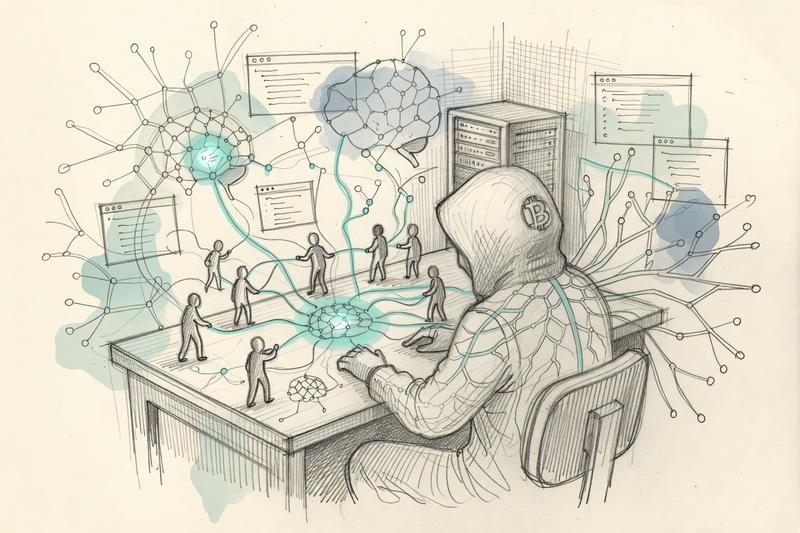
The question that lingers for me is simple. When every developer, every operator, every curious mind can deploy their own fleet of competent agents that answer only to them, what does the next layer of software and society even look like? The answer won't come from another foundation model release. It will come from the people who actually use these things day after day.
The dawn of reliable local agents isn't flashy. It doesn't come with a keynote or stock pop. It just quietly makes the impossible feel routine. And that might be the most dangerous kind of progress there is.