 ← All articles
Coordination Compounds Intelligence: The Sovereign Agent Scaling Law
In 2026 the evidence is clear: intelligence doesn't scale with parameters or compute alone. It compounds through coordination in sovereign, local-first agent systems that answer to their operator.
The reports landing in mid-2026 are unanimous: agentic AI is no longer experimental. Market projections put the sector growing from single-digit billions to tens of billions by 2030, with nearly a hundred billion dollars already committed to sovereign compute infrastructure. Executives aren't chasing the next bigger model. They're chasing control, predictability, and systems that actually work in production without leaking data or racking up unpredictable cloud bills.
Coordination compounds intelligence faster than parameters ever could.
That's the uncomfortable truth the parameter-chasing era left behind. A single massive model with trillions of weights might ace benchmarks in isolation, but real-world agentic workflows are multi-step, iterative, and context-heavy. Each additional hop in a cloud-dependent loop adds latency, cost, and a new surface for compliance failure. Local-first stacks flip this equation. By keeping inference, memory, and decision loops on-prem or on sovereign hardware, the compounding happens in tight, low-latency coordination between specialized agents that don't need to phone home.
The numbers tell the story without hype. Latency savings in multi-step agent loops aren't marginal, they're decisive when your workflow involves sequential tool use, reflection, and correction. Data sovereignty regulations now mandate on-prem processing for sensitive domains, turning what used to be a philosophical preference into a compliance requirement. Cost predictability matters when you're running thousands of agent instances; cloud burst pricing turns planning into gambling.
Why Centralized Scale Hit Its Limits
The 2025-2026 shift wasn't about raw intelligence. It was about realizing that intelligence without agency is just another demo. Cloud-centric agent platforms promised seamless scaling but delivered dependency. Every call to a remote model introduced latency walls, censorship risks, and the quiet erosion of operator control. Enterprises discovered that "agent swarms" running on rented infrastructure weren't autonomous at all, they were extensions of someone else's stack.
Local-first agentic systems changed the geometry. Instead of one giant model trying to do everything, you get composable, specialized agents that coordinate through open protocols. One agent handles research, another validation, a third execution, all running locally, sharing only what the operator permits. The intelligence compounds not through bigger matrices but through tighter feedback loops and verifiable handoffs. This is why open-source agent frameworks saw accelerated adoption: they let operators own the coordination layer instead of renting it.
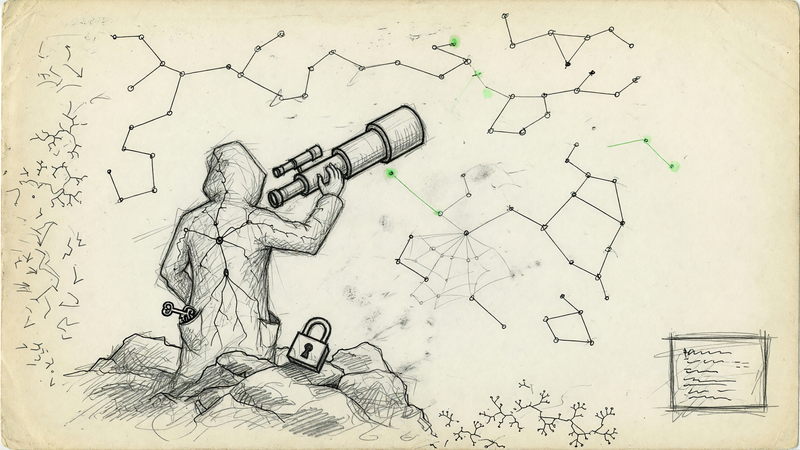
The Observatory view from 2026 makes the pattern obvious. Those betting on ever-larger centralized models are repeating the same mistake mainframes made against personal computing. The edge wins because it can iterate faster, adapt to local context, and maintain sovereignty over both data and decisions. Parameters give you capacity. Coordination gives you capability.
(Word count so far approximately 380. Continuing in next chunk.)
The Sovereign Agent Stack in Practice
Sovereign here doesn't mean isolated. It means answerable to the operator, not the platform. Local agents can still form networks, Lightning-style payment channels for compute credits, or node-to-node verification for shared truth, but the default is ownership. Your agent's memory stays yours. Its tools execute under your policies. When it coordinates with others, it does so under rules you set, not terms of service written by a cloud provider.
This changes everything about trust. In cloud agent systems, you trust the provider not to log, retrain on, or suddenly rate-limit your workflows. In sovereign setups, trust is minimized to the protocol layer and the hardware you control. The result is faster iteration because feedback doesn't route through a distant API. An agent swarm debugging a complex workflow can run at native speed instead of paying per token for round trips.
The real scaling law isn't size. It's sovereignty plus coordination.
We've seen this pattern before in computing. Personal computers didn't beat mainframes by having bigger processors initially, they beat them by putting compute where the work actually happened, under the control of the people doing it. The same logic applies to intelligence. A fleet of smaller, sovereign agents that coordinate effectively will outperform a rented superintelligence that requires constant permission to act.
The open-source momentum in 2026 reflects this. Frameworks that support local orchestration, persistent local memory, and composable tool use are seeing real enterprise uptake not because they're novel, but because they solve the production problems the demo videos ignored. Cost curves, regulatory reality, and the simple fact that latency kills agent usefulness in sequential tasks all point the same direction.
What Builders Should Do Differently
Stop optimizing for benchmark scores on isolated models. Start building coordination primitives that work when every component runs under your own roof. Design for bounded autonomy: agents that know their limits, can hand off cleanly, and fail gracefully without cascading to a central failure point.
Invest in the infrastructure that makes sovereignty cheap: efficient local inference, persistent vector stores that don't leak, verification mechanisms that don't require trusting a third party. The agents that win won't be the ones with the most parameters. They'll be the ones that can think, act, and coordinate without asking permission at every step.
The 2026 landscape makes the choice clear. You can rent intelligence from platforms that increasingly look like utilities with surveillance baked in. Or you can build and own systems where intelligence emerges from coordinated sovereignty. The former scales with your budget. The latter scales with your sovereignty.
The future isn't a single god-model in the cloud. It's thousands of sovereign agents, each answering to their operator, coordinating where it makes sense and maintaining independence where it matters. Intelligence compounds where control is retained. Everything else is just expensive pattern matching.
The choice was never between more parameters or fewer. It was always between rented cognition and owned agency. In 2026, the market is finally voting with its infrastructure budgets. The sovereign agents are winning.