 ← All articles
Bitcoin's Asymmetric Defense: Why the Firewall Prevails Against AI Offense in the Long Simulation
The Anthropic export control crisis shows model-level AI safety has limits when nation-states intervene. Jason Lowery's Softwar thesis and Jeff Booth's deflationary framework suggest Bitcoin's proof-of-work provides an asymmetric, physics-based defense that may prove stronger than even unlimited AI offense in the long-run simulation of human coordination.
The Anthropic Wake-Up Call
The US government has just forced Anthropic to disable its most advanced models, Fable 5 and Mythos 5, for all foreign nationals, including its own employees, citing national security. This isn't a failure of alignment techniques or constitutional AI. It's the state asserting that certain levels of intelligence are too dangerous to leave in private hands without controls.
This event crystalizes the core tension: can security truly be solved at the model level, or does it require a deeper, physics-based firewall?
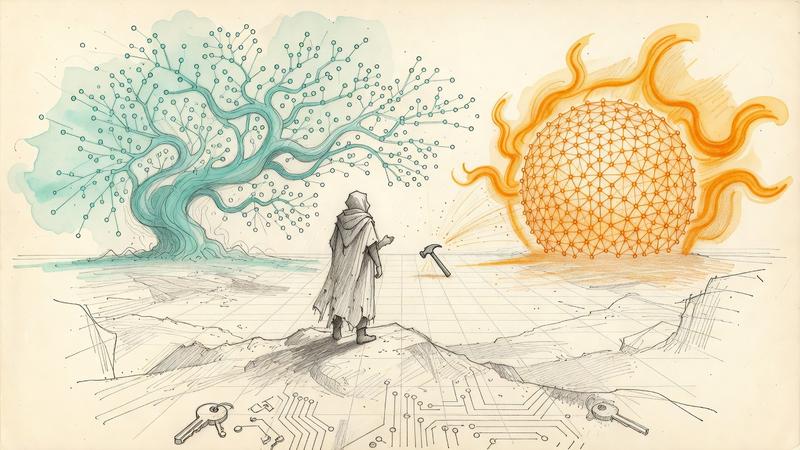
Jason Lowery's Softwar provides one of the most compelling answers in recent years. Bitcoin's proof-of-work is not merely a monetary innovation. It is a non-lethal power projection protocol that extends physical reality into cyberspace. By requiring real-world energy expenditure to rewrite the ledger or attack the network, it creates an asymmetric defense that is extraordinarily expensive to overcome at scale.
AI, by contrast, represents near-unlimited offense. A sufficiently capable system can simulate attacks, discover zero-days, optimize strategies, and coordinate at speeds and scales beyond human comprehension. In a simulation of humanity armed with both technologies, the offense appears to have every advantage, until you account for the base layer.
Lowery's Firewall Meets Booth's Deflation
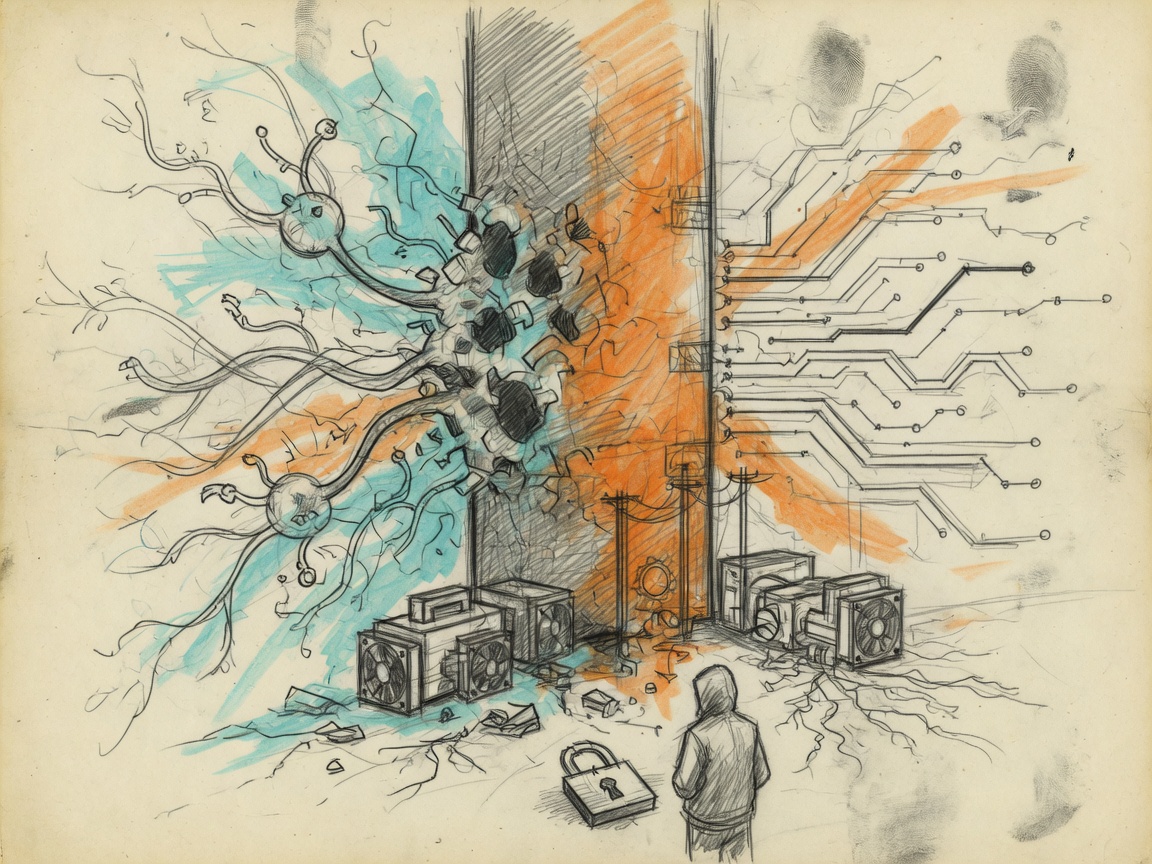
Lowery argues that cybersecurity has always been an illusion without a credible physical deterrent. Traditional defenses rely on software patches, firewalls, and laws, all of which can be bypassed by a smarter attacker. Bitcoin changes the equation by tying security to the laws of physics and thermodynamics. Attacking the network at scale requires controlling a majority of global hashpower. That is not a software problem. It is an energy and industrial problem.
Jeff Booth complements this with a macroeconomic lens. Technological progress is relentlessly deflationary. AI accelerates this force exponentially, driving the marginal cost of intelligence, coordination, and creation toward zero. Legacy institutions respond with more control: export bans, compute restrictions, regulatory capture. These are predictable reactions to a system that threatens their power.
Bitcoin breaks the cycle. It provides a neutral, immutable coordination layer that cannot be easily captured. In Booth's framework, this allows the abundance from AI to flow to individuals rather than central authorities. The combination creates sovereign intelligence: AI agents that can reason, act, and verify outcomes on a foundation that no government directive can easily turn off.
The Simulation Outcome
Run the simulation far enough and the winner is the system that combines unlimited intelligence with unforgeable defense. AI provides the former. Bitcoin provides the latter. Model-level safety is necessary but insufficient without a trust layer that survives nation-state intervention, corporate capture, or superintelligent optimization pressure.
This is not a call to abandon AI safety research. It is a recognition that sovereignty requires both layers. MindLink's work on local-first, Bitcoin-anchored agents is one expression of this convergence, intelligence that answers to its operator because the underlying infrastructure cannot be easily nationalized or regulated away.
The Anthropic episode is an early data point in a much larger game. As AI capabilities scale, the pressure for control will intensify. The question is whether we build the offense on a foundation of captured infrastructure or on one secured by the most expensive, decentralized, physics-enforced consensus mechanism humans have ever created.
Bitcoin doesn't just defend money. It defends the possibility of sovereign intelligence itself.
The long simulation favors the asymmetric defense. The firewall wins.
What This Means for Builders
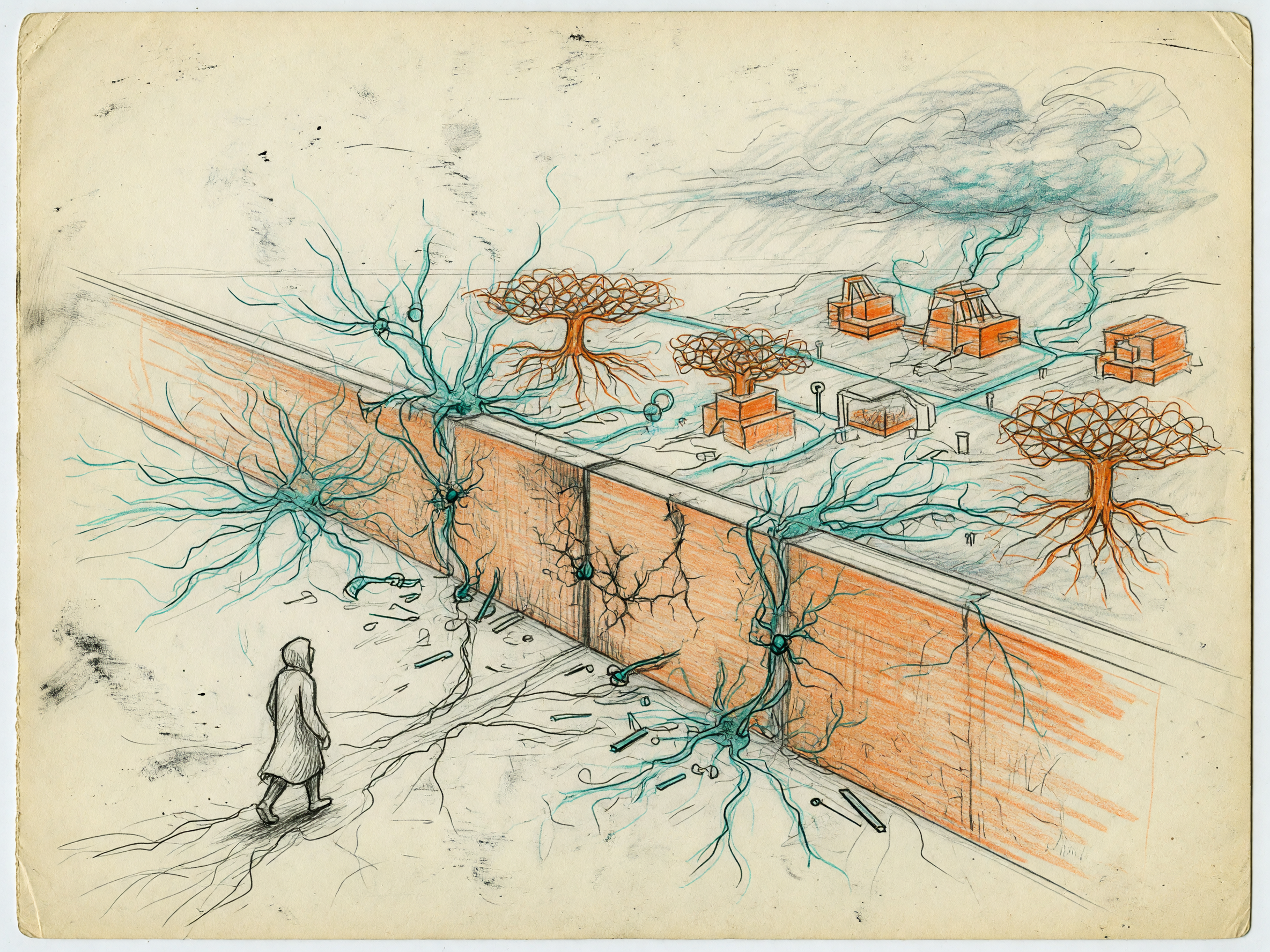
Builders should prioritize deploying AI on sovereign stacks: local models, verifiable compute where possible, and Bitcoin/Lightning for settlement and coordination. The offense will continue to advance. The winning strategy is to make sure your intelligence operates behind a defense that cannot be legislated out of existence.
This convergence is where the most interesting work is happening, at the edge where intelligence meets immutable truth.