 ← All articles
Why AI Agents Still Forget: The Memory Architectures We Desperately Need
Stateless LLMs create flashy demos but fail at sustained, reliable work. Multi-layered memory systems, short-term working memory, episodic events, semantic knowledge, and procedural skills, are the missing infrastructure that turns reactive chatbots into agents you can actually depend on over time.
The latest technical deep-dive on AI agent memory systems hits at exactly the right time. We've spent years building increasingly sophisticated large language models that can reason, code, and chat like pros in a single session. But the moment you ask them to handle anything that spans more than a few turns or a few hours, they start forgetting. Not metaphorically. Literally.
This isn't a minor annoyance. It's the core limitation preventing us from deploying agents that do real work. An agent helping you manage a project might remember the requirements in the first message but by the tenth interaction it's hallucinating details it confidently invented five turns ago. Another one researching a topic slowly drifts, repeating questions or contradicting earlier conclusions because the relevant context got pushed out of its limited window.
The fundamental issue is that LLMs are stateless. Every call is a fresh start with whatever you cram into the prompt. Context windows have grown, but they're still finite, expensive, and brittle. Stuff the prompt too full and you pay more, slow things down, and risk the model getting lost in the noise. The solution isn't bigger windows. It's proper memory architecture.
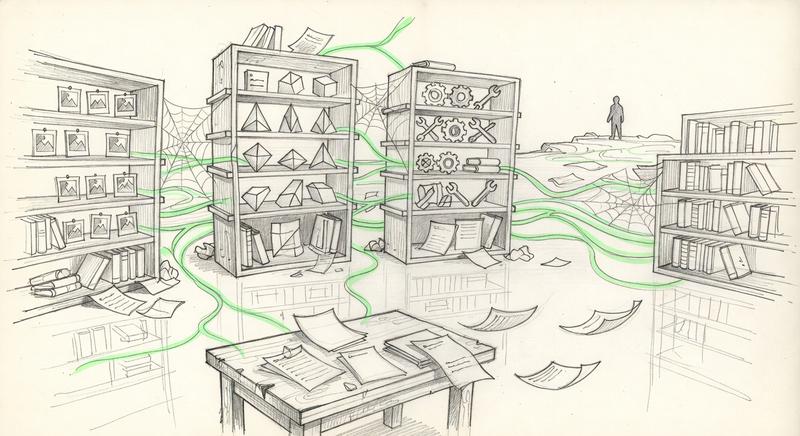
Think of it like upgrading from a goldfish to something with actual cognition. Human memory isn't one big bucket. We have working memory for what's happening right now, episodic memory for specific events, semantic memory for facts and concepts, and procedural memory for skills and processes. The best agent frameworks are starting to copy this structure.
Short-term or working memory acts as the agent's active context: the immediate conversation, recent tool outputs, current reasoning steps. This is what lives in the model's actual prompt. But because it's limited, smart systems need eviction policies that aren't just dumb FIFO. You want to keep what's relevant, recent, or likely to matter soon.
The real magic happens in long-term memory. Episodic memory stores specific interactions and events with timestamps and context. "User requested report on Project X at 10:15, we used tool Y, output was Z." Semantic memory distills the important facts and relationships from those episodes. "Project X involves quantum computing and has a deadline next month." Procedural memory captures what worked, successful tool use patterns, workflows that produced good results.
This layered approach isn't theoretical. Frameworks like MemGPT treat the LLM like a CPU with limited RAM, intelligently paging information to and from external storage. CoALA separates the decision-making controller from explicit memory modules with clear read/write/query operations. Tools like LangMem and Zep provide vector-backed stores with automatic summarization and retrieval.
The implications are profound. Without robust memory, agent pilots fail at scale, one report cited 86% never reaching production. Memory drift leads to hallucinations, inconsistencies, and broken workflows. An agent that can't reliably remember what it did yesterday can't be trusted with anything important.
This isn't just an engineering detail. It's a philosophical one. Intelligence without memory is reaction, not agency. An agent that forgets its own history can't develop preferences, learn from mistakes, or build genuine understanding of its user or environment. It stays a clever autocomplete with tools.
For those of us building or deploying sovereign AI, systems that run locally, respect your data, and don't phone home to some cloud provider, proper memory design becomes even more critical. You can't outsource your agent's long-term knowledge to someone else's vector database if you actually care about ownership and privacy. The memory has to live where the agent lives. That means efficient, compressed, intelligently managed storage on your own hardware.
The frameworks emerging now give us the blueprints. Intelligent forgetting isn't a bug, it's a feature: the ability to summarize, consolidate, and discard noise while preserving signal. Conflict resolution when new information contradicts old assumptions. Versioning of procedural knowledge as better methods are discovered.
We're moving from single-shot queries to longitudinal workflows. An agent that manages your research over weeks, your code over months, or your business processes over years needs to maintain state without turning every interaction into a 100k token prompt.
The analysis lands at a moment when NVIDIA and others are declaring that all future software will be agentic. If that's true, memory systems aren't a nice-to-have. They're the operating system layer for intelligence. The difference between an impressive demo that resets every conversation and a system that actually gets to know you, your work, and how to be useful over time.
This is where the real work happens. Not in scaling parameters or chasing benchmark scores, but in building the quiet infrastructure that lets agents persist, adapt, and improve. The models get the glory. The memory architectures will determine what actually works.
The next time an agent confidently gives you wrong information about something you discussed yesterday, remember: it's not being lazy. It's operating exactly as designed, without memory. Fixing that design is what separates toys from tools. And the people figuring out these layered memory systems are doing some of the most important work in AI right now.