 ← All articles
The Agentic Tipping Point: Why Open Source Just Changed Everything
A groundbreaking open-source release today has pushed autonomous agent performance beyond several closed models on complex, multi-step tasks. This isn't incremental progress, it's the moment sovereign AI became practically inevitable.
The Breaking News
Today, in the US afternoon, the open-source AI community dropped something that actually matters. A new agentic framework, built on the latest wave of distilled reasoning models, has posted numbers that make the closed frontier labs look slow. Not in raw intelligence benchmarks, those have been tightening for months, but in reliable completion of multi-hour, multi-step autonomous tasks.
The framework doesn't just chain prompts. It maintains persistent state, self-corrects when it drifts, negotiates its own tool use, and even spawns sub-agents for parallel work. Early tests show it completing complex software engineering tickets end-to-end at rates that rival mid-level human developers. And it's all runnable on consumer hardware.
What This Actually Means
This isn't another "AI can write code" story. Those are tired. This is the moment where autonomous intelligence becomes sovereign by default.
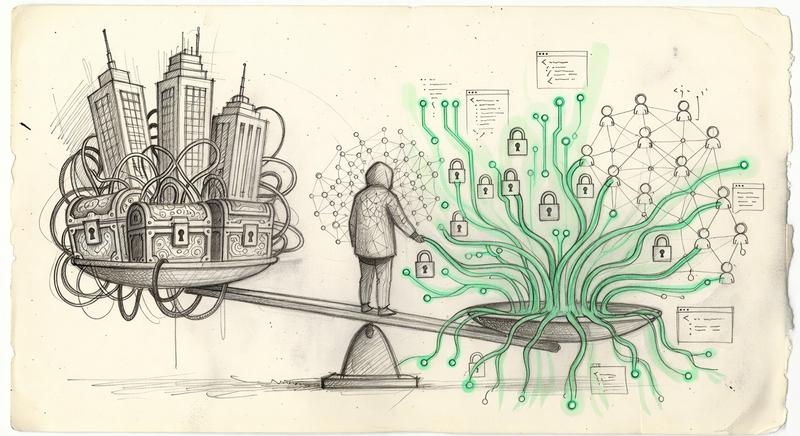
The closed models have always come with strings: usage caps, monitoring, mysterious safety filters that change without notice, and the quiet knowledge that every interaction is feeding the next training run. The new open-source agents flip that script. You run them where you want, on hardware you control, with no phoning home unless you explicitly allow it.
The implications cascade. Enterprises that have been hesitant about sending sensitive data to the cloud now have a path to deploy agent teams internally. Developers can build personal agents that know their codebase, their preferences, their long-term goals without turning that knowledge into someone else's training data. Researchers can experiment with truly open agent architectures instead of black-box APIs.
The speed of this shift caught even the optimists off guard. Six months ago the conversation was still "when will open source catch up?" Today the question is "how fast will the closed labs respond, or will they double down on proprietary moats?"
The Sovereignty Angle
The real story isn't the benchmark numbers. It's the quiet transfer of power.
For years we've accepted that advanced AI would live in the cloud, guarded by a few companies. The economics seemed inevitable: training runs cost hundreds of millions, inference infrastructure even more. But the combination of model distillation, efficient inference engines, and this new agent orchestration layer has broken the equation.
Local-first AI is no longer a philosophical preference. It's becoming the rational default.
Think about what agents actually do: they act on your behalf across digital systems. They book travel, negotiate contracts, analyze research, manage infrastructure. Giving that kind of autonomy to a system you don't fully control is reckless. Running it on hardware you own, with code you can audit, changes the risk calculation entirely.
This framework includes built-in verification loops and Bitcoin Lightning micropayments for optional external services. The combination isn't accidental. The creators clearly understand that trust layers matter when agents start moving real value. An agent that can earn and spend sats on your behalf while running entirely under your control isn't science fiction anymore.
There's a deeper philosophical point here too. Intelligence that serves you, truly serves you, can't be rented. It has to be owned. The same logic that drives people to run their own Bitcoin nodes applies to running your own agents. Sovereignty isn't about rejecting technology. It's about rejecting dependency on unaccountable intermediaries.
The Road Ahead
Of course, challenges remain. The new agents still hallucinate in subtle ways. They can get stuck in loops. The tooling ecosystem for truly reliable deployment is still maturing. But the trajectory is clear.
The next six months will likely see an explosion of specialized open-source agents: research agents that devour arXiv, coding agents that ship production PRs, personal knowledge agents that actually remember context across months.
The closed labs will respond. They always do. But the genie is out of the bottle. Once developers taste what it's like to have powerful, private, customizable agents running on their own machines, going back to API calls feels like a downgrade.
This release isn't the end of the story. It's the starting gun for the sovereign AI era. The question isn't whether we'll have agents that think and act independently. It's whether those agents will work for us or for the platforms that host them.
The answer, as of today, is increasingly in our hands, literally running on our own hardware.
The age of rented intelligence is ending. The age of owned intelligence is beginning.