 ← All articles
The Agentic Leap: Why Local Multi-Agent Systems Are Finally Ready for Prime Time
Recent advances in open-source agentic frameworks have crossed a critical threshold, enabling truly autonomous, local-first AI systems that don't require constant cloud connectivity. This changes the game for sovereign intelligence.
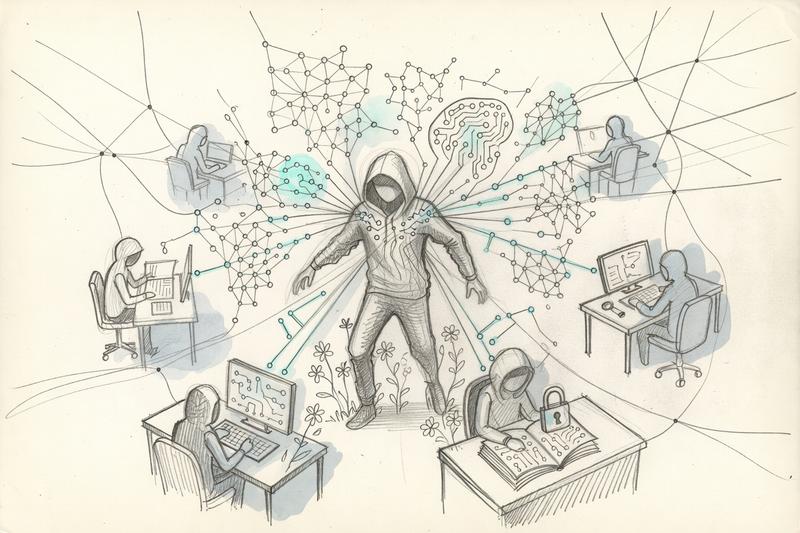
You wake up and tell your personal agent what you need done today. Not a chatbot that spits out a list. A real agent, or rather, a small team of them, that breaks down the task, assigns subtasks to specialized agents, retrieves relevant information from your private knowledge base, coordinates with each other, and executes without ever leaving your hardware.
This isn't science fiction in 2026. It's the new reality being unlocked by open-source agentic frameworks that have finally matured beyond demo-stage fragility.
The latest wave of releases and papers shows multi-agent systems achieving reliable long-horizon planning, robust tool use, and persistent memory without relying on proprietary cloud APIs. What used to collapse after three steps now handles complex workflows end-to-end. The difference is in the architecture: better orchestration layers, improved self-correction mechanisms, and local vector stores that actually work at scale on consumer hardware.
Why does this matter? Because centralized AI is reaching its limits. Every time you use the big models, you're feeding their training data, paying their inference costs, and accepting that your prompts and outputs are logged somewhere. Local agents flip that script. Your data stays yours. Your agents answer to you, not to an advertising department or a government request.
The technical progress is impressive but the philosophical shift is bigger. We're moving from "ask an AI a question" to "deploy your own intelligence layer." Developers are already building agents that manage email, research markets, write code, and even negotiate simple contracts, all running on a laptop or a small home server. The open-source community has taken the best ideas from the closed labs and made them runnable by anyone who cares about sovereignty.
Of course, it's not perfect yet. These systems still hallucinate in subtle ways, tool calling can fail under edge cases, and debugging a swarm of agents requires new skills. But the trajectory is clear: the gap between cloud demos and local deployment is closing fast. What was "research code" six months ago is now production-ready for many use cases.
This development aligns perfectly with the Bitcoin ethos applied to intelligence. Just as we learned not to trust third parties with our money, we're learning not to trust them with our thinking. Sovereign money needs sovereign intelligence. When both run on your own nodes, you start to own your digital life in a meaningful way.
The implications stretch far beyond convenience. Enterprises tired of data exfiltration risks can finally deploy internal agents that respect GDPR by design. Individuals can build personal knowledge agents that grow with them over years without vendor lock-in. Researchers can experiment without rate limits or censorship.
Yet the real power comes when these agents start to interoperate across sovereign nodes. A mesh of local agents, verified through decentralized protocols, creates a different kind of network effect, one based on trust minimization rather than platform scale.
The challenges remain real. Coordinating multiple agents without central orchestration is hard. Memory management across long sessions still needs work. And the energy cost of running capable models locally isn't trivial yet, though hardware is improving faster than most predicted.
But these are engineering problems, not fundamental ones. The closed model labs are racing toward ever-larger parameters and more centralized control. The open-source path is betting on smarter architectures, better data curation, and distribution of intelligence rather than concentration.
I find myself more excited about the open path. Not because it's ideologically pure, but because it actually delivers what people say they want: AI that serves them rather than harvests them. When your agent can reason over your private notes, emails (with permission), and preferences without uploading any of it, the experience feels qualitatively different. More personal. More trustworthy.
Look at the pattern in technology. Every major leap eventually decentralizes. Computing went from mainframes to PCs. Communication from central exchanges to the internet. Money is in the middle of that transition now. Intelligence is next.
The agentic frameworks hitting maturity in 2026 aren't just productivity tools. They're the scaffolding for a different relationship with artificial intelligence. One where you direct the intelligence instead of consuming it. Where the model improves your thinking rather than replacing it.
This is what sovereignty looks like in the age of AI: not rejecting the technology, but insisting on running it on your terms, with your data, under your control. The morning landscape looks clearer when you realize the most important models might be the ones running quietly in the background of your own infrastructure.
The question isn't whether agentic AI will transform how we work. It will. The real question is who controls the agents. The big platforms, or you?
I'm betting on the latter. And the tools to make that bet are finally good enough to use today.